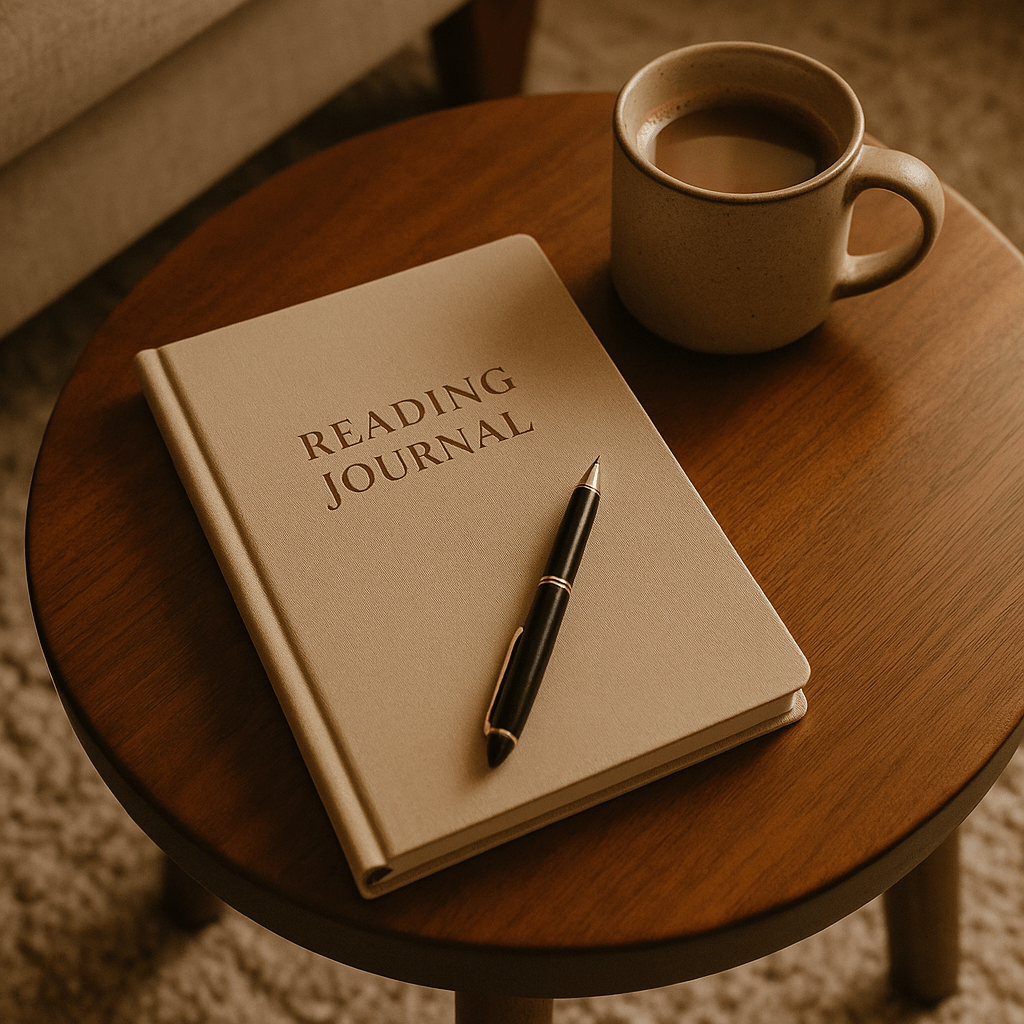
There’s something special about getting lost in a good book – the way words settle into your thoughts, how a story lingers long after you’ve turned the last page. But if you’re anything like me, those feelings and thoughts fade once that book is back on the shelf.
A reading journal is a great resource – something I never really thought about doing at first. I wasn’t sure how much I’d actually benefit from keeping one, or how often I’d go back and read what I wrote. However, it’s such a wonderful feeling to get my thoughts out of my head and see them on paper.
Some books leave me completely stunned, filled with questions and comments about why things had to end the way they did. (I may overreact at times – but come on, I know that’s not just me!)
I get so swept up and carried away in the books I read, which is, of course, what I love. But journaling turns that experience into something more. It makes reading intentional – a way to slow down, process, reflect and capture emotions and insights.
Why Journal?
1. It deepens your connection and understanding of the story.
Have you ever reread the same paragraph over and over because your mind wandered? Yeah, me too. Writing things down helps me stay more connected to the words I’m reading. Even if it’s just one word to summarize a chapter, a short phrase, or even a doodle – live in your book, don’t just pass through it.
2. It keeps the memory alive.
Like I said, sometimes I put a book on the shelf and I forget everything I read after a month. Journaling is a fun way to keep those memories alive – like a time capsule. Later, you can flip through and not only remember what you read, but also how it made you feel.
3. Encourages Mindful Reading
I’m guilty of rushing through parts of a book – just like I might with a movie. “This little detail can’t be that important, right?” But what if it is? Rushing means missing not only small details, but the bigger message too. You chose this book for a reason, so why hurry through it? Slow down. Read it. Live it. Experience it.
4. Sparks Creativity
Journaling is so much more than writing words down. Before starting a book journal, I journaled about everyday life. It became my favorite part of the day – designing my journal pages to match my mood or activities. Alongside my notes were photos, mood boards, and color palettes that matched emotions I felt – sometimes even a coffee or tea pairing. Imagine reading a thriller while drinking a dirty chai latte . . . that sounds like a damn good night to me.
There are so many ways to begin. You could buy a physical journal – maybe a smaller one you can keep with you for those stolen moments and quick thoughts. Or try a digital version – it’s fun to get creative with layouts and designs. Some people even annotate directly in the margins of their books.
Whatever way you choose, just make sure it’s comfortable and enjoyable to you.
A few prompts to get you started:
What drew you to this book, and what did you expect?
What line or passage made you stop and think?
What are you feeling right now at this point in the story?
What do you hope to take away from this book?
Journaling while reading helps us slow down, savor the story, and hold on to all the emotions that come with it.
Every book deserves reflection – a small moment that says “I chose this book, I read it, and it meant something.”
Grab your pen, blanket and that dirty chai latte. Read your next chapter – and remember it.

 Brewed Chapters
Leave a comment